


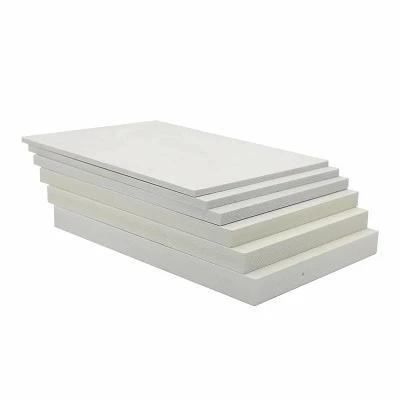
Solid Color Acrylic Laminated PVC Foam Board pairs a rigid, lightweight closed-cell expanded PVC core with a co-extruded or cast solid-color acrylic (PMMA) surface sheet. Bonded via moisture-reactive polyurethane (PUR) hot-melt lamination systems, this composite material eliminates secondary wet-painting or spray-finishing steps on the fabrication shop floor. It supplies a factory-applied, scratch-resistant surface engineered for retail POP displays, architectural wall cladding, and high-end commercial millwork.
Technical Specifications
| Property | Test Method / Standard | Typical Value / Range |
| Core Material | Free-Foam / Celuka PVC | Closed-cell rigid PVC foam |
| Surface Layer | Cast / Extruded PMMA | Solid color acrylic (0.3mm - 1.0mm thickness) |
| Standard Thicknesses | ISO 4593 | 3mm, 5mm, 8mm, 10mm, 12mm, 15mm, 18mm, 20mm |
| Standard Sheet Sizes | ISO 2768 | 1220mm x 2440mm (4' x 8'), 1220mm x 3050mm |
| Density | ISO 1183 | 0.50 g/cm3 to 0.65 g/cm3 (dependent on thickness) |
| Surface Gloss Level | ASTM D523 | 80-95 Gloss Units (High Gloss) / <10 Gloss Units (Matte) |
| Peel Strength (Acrylic to PVC) | ASTM D903 | >= 70 N/25mm (substrate tearing failure preferred) |
| Fire Retardancy | UL94 / DIN 4102 | UL94 V-0 / DIN 4102 B1 |
| Dimensional Stability (70C, 48h) | ISO 2796 | Length change < 0.5%, Width change < 0.5% |
Key Features
Elimination of Secondary Finishing: Factory-laminated PMMA surface removes priming, sanding, and spray-painting, reducing fabrication labor hours.
PUR Lamination Bond Integrity: Moisture-reactive polyurethane cross-links permanently to prevent edge delamination during CNC routing, V-grooving, and edge-banding.
Surface Resilience: PMMA cap layer provides 2H to 3H pencil hardness, offering scratch resistance superior to standard painted or direct-printed PVC sheets.
Fabrication Compatibility: Processes cleanly on standard woodworking and CNC routing equipment using carbide-tipped tooling without chipping the acrylic face.
Applications
Retail Display Fixtures: POP display units, slatwalls, product shelving, and brand showcases requiring uniform solid colors and high-gloss aesthetics.
Architectural Wall Cladding: Interior decorative wall panels in commercial spaces, elevator interiors, and hospitality fit-outs.
Signage and Lettering: Dimensional built-up letters, directional signage boards, and exhibition booth construction.
Casework and Cabinetry: Vertical cabinet doors, vanity drawer fronts, and interior compartment dividers.
Surface & Finish Options
High Gloss: Mirror-like reflection finish with high DOI (Distinction of Image) for modern retail and hospitality environments.
Super Matte: Low-light-reflecting anti-fingerprint surface treated to resist smudge marks and grease accumulation.
Solid Color Portfolio: Standard RAL color matches (e.g., RAL 9003 Signal White, RAL 9005 Jet Black) and custom color matching via spectrophotometer verification.
Protective Film: Single-side or double-side PE peelable masking film protecting the acrylic surface during transport and CNC processing.
OEM & ODM Customization
Core Density Tuning: Adjusting foaming agent ratios during extrusion to target specific screw-holding strengths (> 800 N) or lighter weight profiles.
Custom Thickness Configurations: Non-standard core thicknesses ranging from 2mm to 25mm scaled to project engineering requirements.
Dual-Sided Lamination: Matching acrylic color on both faces or pairing an acrylic face with a balancing PVC backer sheet to minimize panel cupping.
Dimensional Cutting: CNC nesting services for pre-cut panel kits delivered to exact CAD drawing specifications to minimize shop floor waste.
Quality Control & Compliance
Regulatory Compliance: Manufactured under ISO 9001 certified quality management systems. Formulations comply with RoHS directive and REACH chemical safety regulations (SVHC testing verified via third-party laboratories such as SGS).
Peel Strength Testing: Routine T-peel tensile testing conducted every 2 hours on production line samples to verify PUR adhesive bond strength to ASTM D903.
Color Delta E Monitoring: Spectrophotometer color verification against master color plaques, maintaining Delta E < 0.8 across production batches.
Thickness & Density Gauging: Inline beta-ray and mechanical sensors tracking caliper consistency and material density tolerances within +/- 5%.
Thermal Shock Testing: Accelerated aging tests cycling samples between -20C and +70C for 72 hours to verify resistance to blister formation and delamination.
Supply Chain & Logistics Capacity
Production Output: 8 automated extrusion and lamination lines yielding a monthly capacity exceeding 1,200 metric tons.
Export Packaging Engineering: Shipped on ISPM 15-compliant fumigation-free solid wood pallets. Sheets are secured with heavy-duty corner edge protectors, interleaved with waterproof PE protective paper, and strapped with high-tension composite bands.
Container Loading Optimization: Standardized loading protocols for 20-foot and 40-foot high-cube containers using moisture-absorbent desiccant poles to prevent condensation damage during ocean transit (up to 450 sheets per 40'GP depending on thickness).
Lead Times: 15 to 20 days for standard catalog colors; 25 days for custom color matches and non-standard thickness production runs.
Manufacturing & Processing Facility Experience
Extrusion Line Infrastructure: Twin-screw conical extruders coupled with vacuum calibration cooling tables ensure uniform core cell structure and density distribution.
Lamination Cleanroom Environment: Dust-controlled roll-to-roll PUR hot-melt lamination stations equipped with web cleaners and tension control systems to trap airborne particulates between the film and substrate.
Shop-Floor Troubleshooting Experience: Preventing core thermal warping requires strict monitoring of melt temperature differentials between the PVC extrudate and the acrylic cap layer. Maintaining web tension within precise limits during the PUR curing window eliminates micro-bubbles and surface wave distortion.
FAQ